Showing posts with label pet training. Show all posts

Friday, January 24, 2014

Bonding and Building Trust - On training the "ideal dog"


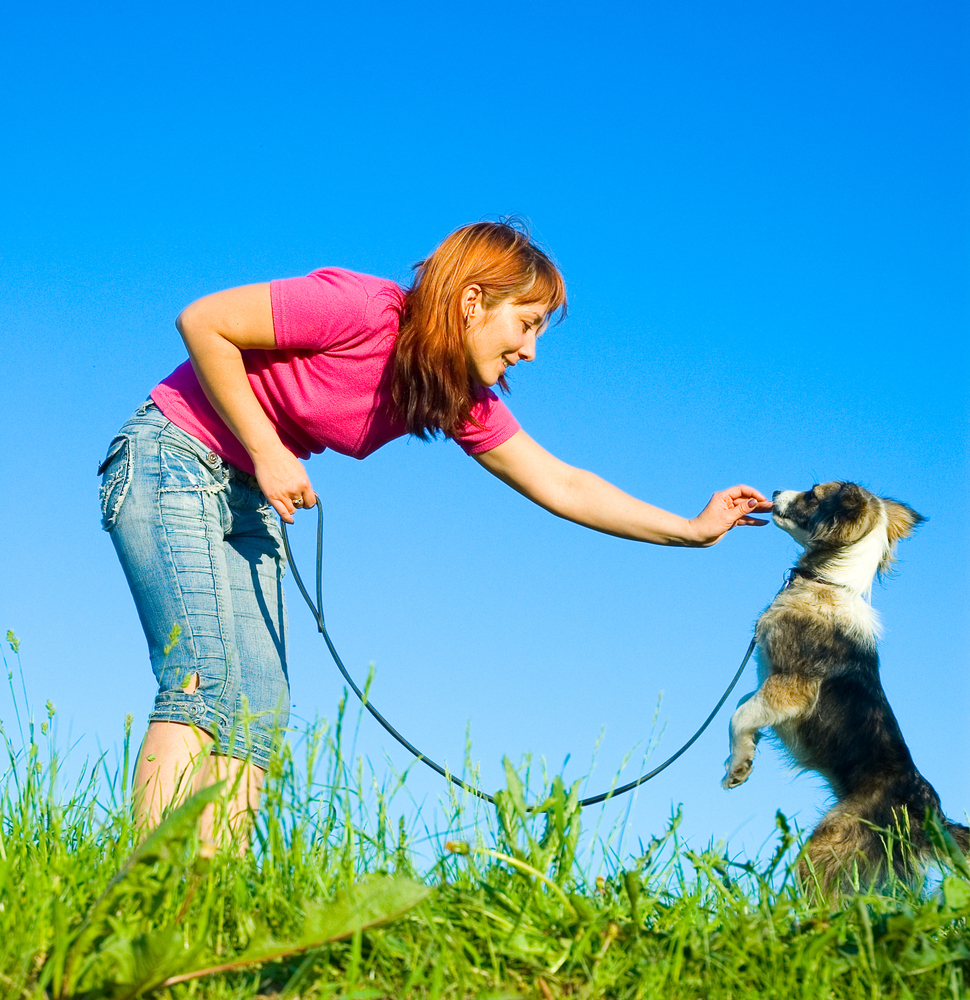
Everyone wants to own their “ideal dog.” Whether that means having a big, playful pup or a small little couch potato, the description of this ideal dog can vary greatly from person to person. Whatever you picture as your perfect pet, people often share one common ideal trait: a dog that listens to you when you ask them to do something.

An obedient dog that pays attention when you say things like, “no jumping on the houseguest,” or “get off the furniture” is always ideal, but the question is, how do you get your dog to listen? The first step is to teach them a command that means a behavior. This is why taking pet training classes with your dog is one of the most essential things you could ever do. 

Through training, you can teach your dog behaviors that will not only help improve their quality of life¸ but it will make your job easier as well. Pet training can also teach your dog behaviors that have the potential of saving their life. Something just as important as pet training itself, however, is you, their human, being involved in your dog’s training.

Being present and active in training is critical in the reinforcement of your dog’s behaviors elsewhere. When you are involved in training, you are building a relationship with your dog that will greatly enhance the bond that you share. Beyond building that bond, training your dog also builds trust. Your pet begins to really understand that you are there to reward them when they do something good. If you are not the one teaching the dog behaviors, your dog never learns that they need to work for you. You have to teach your dog to listen to you, and they need to know when they do listen, they will be rewarded greatly.

More than just being involved yourself, it is important to have as many people in your household participate in training as possible. Having more people in the family involved helps confirm that everyone will be reinforcing similar things. 

Pet training is extremely important for you and your dog, and it’s so crucial that you are involved in your dog’s training as well. In recognition of January as National Train Your Dog Month, Morris K9 Campus realizes the importance of training and owner involvement and has collaborated with six different local shelters and rescues: 11th Hour Rescue, Randolph Animal Pound, One Step Closer Animal Rescue (O.S.C.A.R.), Cold Nose Warm Heart, Mount Pleasant Animal Shelter and Coming Home Rescue. Every dog adopted from these shelters during the month of January can enter for a chance to win one of six 2-month training memberships to Morris K9 Campus! Call or visit these shelters to consider adding a new ideal pet to your family and to enter this exciting contest.

Friday, September 27, 2013

Are You Prepared if Your Dog Suffers from Hearing Loss?

This week is Deaf Dog Awareness Week. As dogs start getting older, signs of their age tend to begin to show. One thing that a lot of dogs will face in their lifetime is a loss of hearing.  Most owners who have hearing dogs don’t fully realize that a good amount of their dogs will have hearing loss at some point in their lifetime. It’s best to prepare yourself and your dog in case anything were to happen to your dogs hearing.


Practice Hand Signals with your Pup
As your dog gets older it is best to start incorporating basic hand signals for common commands. Sit, down and come would be good commands to have hand signals for. As your dog begins to age, adding a hand signal in addition to the words would assure that if your dogs hearing did start to go, you would still have basic commands to use.

Have Patience
It can sometimes be difficult to realize your dogs hearing is going until it is almost gone, but remember to have patience with your pooch. You undoubtedly will have to teach your dog some new things in order to get their attention, for example since a recall is such a verbal command, a flashlight can be used during a recall with a deaf dog. Don’t lose your cool if you get frustrated easily; remember that your dog is going through a huge change as well.

Always Make your Presence Known
Your pooch will no longer be able to hear you when you enter the room, so it is important to make your presence known so you don’t startle them. A tap on their back or flicking on and off the light switch is a great way to let your dog know you have entered the room.

Reward your Dog with Food and Physical Affection
Since deaf dogs can’t hear you, it’s important to reward them with food and physical affection. When learning their new commands use food instead of verbal praise, this way your dog is actually being rewarded for what they are doing. As you continue through your training a nice belly rub or a rub behind the ears will do nicely for your pooch.

For dogs that live long lives, deafness can be inevitable for some of them. If you are prepared for it to happen, it can make the transition easier for you and your pooch. Be patient with your dog and remember that there are so many great resources out there if your dog is deaf, a trainer will be able to customize your training for your deaf dog. There are also many great internet sites and support groups, like DeafDogsRock.com, which is a great community of owners with deaf dogs, that provides great information about living with a deaf dog.


Friday, July 19, 2013

Kids and Dogs


Dogs and children both require a lot of attention, so when they interact with each other, sometimes things can get complicated. If you follow a very simple checklist, you can prevent dangerous situations and your pets and kids can get along well. Keep in mind that this list is aimed at older kids about three years and up:


Kids and Dogs’ Checklist:
  • Establish ground rules before the two interact for the first time. Lay out the rules for your child as clearly as possible and make sure they agree to follow them.
  • It’s critical to teach your child the right way to approach and interact with your dog. Teach them to pet the dog on their chest and cheeks, rather than hitting the dog on the top of the head. 

  • Protect your dog and make sure they feel safe while your child is interacting with them. If your puppy feels unsafe, they may be forced to protect themselves which can be risky for your child. You can help prevent this by monitoring interactions between the two and stopping your child from doing things like pulling on your dog’s ears or tail. 
  • Do not allow rambunctious play between your child and dog, even if it sounds like they are both having fun. Running around and screaming can be too much for your dog and over stimulation can cause your puppy to act improper with your child.
  • Educate your child on how to properly play with your dog with games like hide and seek, fetch and catch. These can all be great games if properly played and supervised. 
  • It’s important to teach your kids to never approach a stranger’s dog without permission from both you and the dog’s owner. Not all dogs are friendly, and even a friendly dog can be scared by an overexcited child.
  • Get your children involved in the training of your dog. This is a great way to build a confident relationship between the two. Keep in mind that you should be monitoring all types of training that your child does with your dog, as kids tend to go to extremes with their commands and it can end up having an adverse effect on your pooch.
  • Children and puppies should never be unsupervised at any point, period.  


Children and dogs can have a great relationship if it is handled properly. Make sure to always supervise your child and your dog to prevent any incidents. Getting your children involved in the training of your dog teaches them responsibility and can greatly improve their relationship. Morris K9 Campus offers a “Kids Training Dogs” Workshop, where you can oversee your child as the one in charge of training your pooch. Visit or call (973) 252-5100 to sign your kid and your pooch up today!


Friday, June 14, 2013

Crate Expectations


So your puppy is doing great. Your pooch is crate trained and is not  having accidents in the house. Now the question is when is it okay to leave your puppy out of the crate when you leave the house or go to sleep? Whether it’s housebreaking, chewing or getting into things, you have to resolve the issue before your dog can roam around your house unsupervised. 


A good rule of thumb is for your pooch to go eight months incident free before letting your dog out of their crate unsupervised.  This means your dog should go an entire eight months without the specific issue. For a dog with housebreaking issues, this means eight months without having an accident in the house. For dogs with a chewing issue, your dog needs to go that period of time without attempting to chew on anything they shouldn’t while under your supervision. Same goes for getting into things; if this is the issue you have with your dog, they need to go that long without attempting to get into things while you are watching them.

The key to successfully having your dog crate-free in your house while you are away is making sure you start with small increments of time. This would entail leaving your dog home alone for no longer than an hour at first, and gradually building up to longer periods of time. Once they grow used to the hour alone, slowly extend the amount of time they are left out of the crate by themselves. At the beginning, your dog should still be confined, even though they are not being crated. This could mean letting them out of the crate, but leaving them in a gated space, such as the kitchen. It’s important to not let your dog have free roam of your entire house right away. Once your pooch has worked their way up to long periods of time in a confined area, you can then begin to give them free reign in other areas of the house. Again, with this transition, you want to start off with small periods of time and work your way back up to longer times. 

When it comes to letting your dog sleep out of the crate, the same eight months free of an accident rule still applies. Remember that you are sleeping, which would allow your dog plenty of time to explore unsupervised. 


While the biggest step in this process requires your dog to behave, you can also help by setting them up for success in their new, more spacious environment. Make sure there are not things around for your dog to easily access. If you had housebreaking issues, make sure your pet goes out before you leave or before you go to bed. If you have a dog that chews, make sure that you have Kongs and chew toys for them to keep their mouths occupied. Always pet-proof your house before you leave by putting away things that could cause problems for your pet, such as garbage and household chemicals. 

Leaving your dog alone is a process, and if your dog has an accident during this process, it’s best to go back to square one. This means if your dog has an accident, you need to return them to the crate the next time you leave, and again at night, until they go another eight months without an accident. Though this can be a long process, it will be worth it so you feel comfortable enough to leave your dog home alone and when you go to bed at night without worrying that they will have an accident. 

We know that life is busy and you may not have the time to go through this process. Morris K9 Campus offers customized puppy housebreaking and training to work around your schedule and help make this training process a little easier.

Friday, June 7, 2013

Dr. Ian Dunbar at Morris K9 Campus

Does your dog do something that you just can’t understand? Are you interested in learning more about dog behavior and how it pertains to your pooch? Join Dr. Ian Dunbar next Saturday night at Morris K9 Campus as he takes a rare opportunity to answer the questions you have about your dog. Dr. Ian Dunbar is a well-known veterinarian and animal behaviorist who has been a pioneer in both puppy socialization and dog training.

Dr. Dunbar graduated with his degree in Veterinary medicine from Royal Veterinary College at London University, and received his doctorate in Animal Behavior from UC Berkley. He also founded the basis for positive dog training and introducing positive methods such as luring, which replaces ineffective punishment methods. These training methods eventually lead to Dr. Dunbar founding the Association of Pet Dog Trainers, known as APDT. The association is aimed at providing dog owners with the tools and resources they need to find dog trainers and advice on raising your dog.

Dr. Dunbar created the world’s first off leash puppy class, a revolutionary approach to the socialization and training of puppies. His innovative puppy class is the basis and foundation for the weekly puppy class offered at Morris K9 Campus.

Saturday June 15th from 7:00pm to 9:00pm is your chance to ask questions about efficient ways of training your dog. Whether you have specific or general questions, this Q&A session can greatly benefit both you and your dog. We believe that learning effective training methods is so important that we want to invite our blog readers to attend this session for FREE. All you need to do is register online. Register on our website at www.MorrisK9Campus.com, enter the code DUNBAR13 for free registration and join us on Saturday the 15th ready to ask any and all questions about training your pup! This Q&A session is for humans only.

In addition to the evening question and answer session, Dr. Dunbar will be hosting a Fun and Games Dog Training Workshop on Saturday and Sunday, June 15th and 16th. As a part of his east coast seminar tour, this workshop presents a unique opportunity to work side-by-side with your dog and Dr. Dunbar! Visit the event website at www.jamesandkenneth.com for more information and to register.

From his Q&A to his hands-on workshops, these events will be an experience that no pet owner is likely to forget! Take advantage of this unique experience and register now!

Saturday, May 25, 2013

Dog Safety: Dog Bite Prevention


This week is national bite prevention week, and according to the American Veterinary Medical Association 4.5 million people are bitten by dogs in the United States alone. If you know how to read a dog’s signs and educate young children on how to properly greet a dog, those numbers could significantly change. There are two things that every owner should consider when their dog encounters a situation with new people or situations that make them nervous. Remember that you are your dog’s voice, and you must interpret what the dog is trying to tell you.


One: Remember to be your dog’s advocate. Know when they look stressed, and be ready to remove them for the situation when necessary. Most dog bites are preventable and dogs show signs before resorting to biting. Look out for signs of stress in your dog that could lead to them eventually to biting. A great reference for this an article about reading stress signs in your dog. Don’t be afraid to appear like the “bad guy” in situations. This just means you are being an advocate for your pooch and you are making sure you don’t make the dog feel like they have to handle the situation themselves.  Preventing a negative incident is as simple as taking your dog away from a situation or not allowing someone to meet your dog.

Two keep in mind that, every dog has the right to say no. Know that every dog has a certain limit; know that no matter how squishy your dog is there may be a person that frightens your dog when they meet. If your dog is saying “no,” you have to respect that. You don’t want to force your pooch to meet people in situations where they are clearly trying to get away. Read your dog’s body language and let your dog be able to tell you, “no I don’t want to meet that person.”


It is important to educate yourself on ways to prevent dog bites, which would include knowing the proper way of greeting a dog. If you have young children it is also important to make sure that they know how to properly greet a dog as well. The more we educate ourselves and others on proper dog etiquette, the more efficient we will be at preventing dog bites. 

Friday, May 10, 2013

Stages of Fear: How to Help Your Dog When They're Afraid


Dogs tend to wear their emotions right on their, well, paws. A happy dog is easy to spot, but can you tell when your dog is even the slightest bit afraid? Once you have learned to read the signs of stress in your dog (see our blog post “Happy or Stressed Dog: Do You Know the Difference?”), you can begin to tell what their fears and phobias are as well as how to properly deal with them. Severe stress in dogs can be caused by both fear and phobias, but it is important to know the different signs depending on the dog.

A phobia is when a dog is anticipating something and experiencing unease during the build up. For example, if your dog had a bad experience with a dog on a particular road and now won’t go down that street or barks and thrashes when taken to that area, that has become a phobia.
A stuffed Kong toy can be a good distraction for a dog that is beginning to show signs of fear.
Fears are when a dog is afraid of a current situation. For example, when a stranger comes into your home and your dog barks and backs away, that is a clear sign of fear in your pooch.

There are different stages that dogs go through before their fear becomes extreme. These can be broken down into four general stages, but it’s important to recognize that some of the stages can be more complex, and not all dogs will display or feel all of them.

Many people can recognize when their dog is feeling fearful, but you can help your dog feel safer in unsure situations by learning to recognize the early signs of mild fear. You can start by learning to understand the process and stages that your dog’s mind goes through when facing this kind of situation. The stages start with avoidance and go all the way down through shutdown.

Avoidance: When a dog turns away from what they are interpreting as “bad.”

Tolerance: A tolerating dog will withstand the “bad,” and is willing to put up with it for a good amount of time. The dog is coping, but doesn’t like it. It’s important to be able to tell the difference between enjoyment verses tolerance; just because your dog is tolerating something doesn’t mean they are actually enjoying themselves in the situation.

Enough Already: A dog in this stage will display a negative reaction to the “bad” thing. They may become aggressive or lash out, leading to negative consequences. You do not want your dog to get to this stage if you can prevent it, which you can do by picking up on your dog’s signs in the earlier stages.

Shutdown: You will essentially get no reaction from your dog in this stage. A dog that is shutdown will appear to have a complete disconnect from the situation. This is where your dog turns off and shows no signs whatsoever.

All dogs don’t react the same way, so signs can be different in different dogs. The best way to help your dog is to recognize the signs at the beginning stages and address your dog’s issue before they move to the next stage. Recognizing fear is crucial in order to help solve the issue that your dog is facing.

Thundershirts aren't just for showers... these cozy coats help nervous dogs feel secure. Hood optional!
You can lower the stress by removing your dog from the situation, removing “the bad,” pairing the bad with something good, and doing things that you know calm your dog. Remedies can range from ThunderShirts, which a dog can wear to help them feel secure, to calming music to stuffed Kongs. Many of these products are available for purchase in our lobby at Morris K9 Campus If your dog has high anxiety and you can’t seem to solve it, it is always best to consult a trained professional. Taking your dog to private lessons can help pinpoint your dog’s fears and help you both to move past them. Call us at 973-252-5100 or visit our website to learn more about our private dog training today.

Thursday, March 21, 2013

Bark all about it! De-stressing tip three: How to stop "give me that" barking


Do you have a dog that tends to bark in order to get something from you? There are lots of reasons why dogs bark, as it is their dominant means of communication, but this persistent “give-me-that” barking is when a dog continuously barks at you until they get what they want. As stressful and annoying as this behavior can be, “give me that” barking can be an easy thing to correct. Eliminating it can be simple, but the key is to be consistent.

The most common times your dog will bark are during dinner (to beg for food), playtime (to get you to throw a toy) and just before going outside (when seeing a leash), all in order to get your attention. Let’s break down these specific examples of “give-me-that” barking, and what tools you can use in order to discourage the behavior.

Barking for playtime: If your dog drops a tennis ball on your lap and starts to bark at you to get you to play, it is a prime example of “give-me-that” barking. You want to discourage this behavior by taking the toy away and ignoring your dog until they calm down. Once they stop barking and are calm, the toy can be brought back out, at least until they bark at you again. Keep repeating the same steps until your dog will play with you without barking. It is important to be on top of this behavior and reward your dog by initiating play while they are calm, before they get to the point of excited barking. A dog that is already wound up will tend to bark more as a way of releasing their energy.

Barking when putting on a leash: If your dog begins to bark at you when you are at the door with their leash in your hand, it’s important to put the leash away and sit back down in order to get rid of the behavior. Once your dog is calm, you can get up to bring your dog out again, but you must keep repeating the behavior until they stop barking. The process may seem long and tedious at first, but repeating this action will be worth it when you consistently get the desired behavior from your dog.

Barking at the table for food: Barking at the dinner table in order to get food can be extremely common with dogs. Not only is it an annoying habit, but it can be very stressful for the owner. As with other “give-me-that” barking, eliminating this behavior can be easy if you regularly follow the same steps. If your dog is barking at the table, you can try consistently giving them a time out, a small 30 second period where they are away from the family, until the behavior subsides. Another option is training your dog to do something else during your meals. A great example would be “spot,” or training your dog to go and stay in a particular place (preferably away from the table) until you release them.


If your pooch fits into one of these pesky barking habits, remember that this kind of training takes patience and consistence. If all else fails, consult a professional for advice! Morris K9 Campus offers training to help correct this behavior. Call 973-252-5100 for more information or visit www.MorrisK9Campus.com.


Wednesday, March 13, 2013

How to stop your dog from jumping: Week two of our March de-stressing tips

Do you dread people coming to your house because you don’t know how to get your dog to stop jumping? We are here to help! Continuing our March theme of giving you some helpful de-stressing tips, we are focusing on jumping.


The behaviors your dog displays when meeting another person can be just as important as the behaviors they display when meeting another dog. Before you scold Fido for jumping on people, it’s important to establish your rules for jumping. Decide what you want to allow your dog to do, and stick with it. Once you determine whether or not you will allow your dog to jump, you can begin training.

The main rule of training is just as important for you to follow as it is for your pooch: You cannot be selective about who your pup can and can't jump on. It’s no okay to praise and pet your dog when they jump on you, for example, but punish them when they jump on grandma.

The most important part of teaching your dog not to jump is to remove any type of attention when they do. Even when you tell a dog “no,” they are still getting some sort of attention from you. Your dog doesn’t care whether or not the attention is negative or positive, as long as they are getting attention. When your dog jumps, it’s best to turn your body around 180 degrees, face away from them and ignore them. This removes the attention they are used to getting and discourages jumping.  Here is a short clip of staff member Caitlyn demonstrating the 180 turn and asking for a sit before petting:


It is crucial that you do not overreact when your dog does jump. If your dog is jumping on you, sniffing and giving you love and you respond by shouting in their face or putting your knee up, you are actually rewarding the wrong behavior and giving your dog the attention they are craving. Believe it or not, this encourages the jumping! The only effective way to respond to jumping is to remove all reinforcement by turning your back, walking away, or giving the dog a time out.
If you do have a dog that you allow to jump, it’s important to take steps to prevent your dog from jumping on someone that they shouldn’t. When grandma comes to visit, ask for a different behavior out of your dog, such as a sit, or prevent them from jumping by curbing the leash. There are ways of managing the situation when you can’t do anything else. You just have to choose the one that works for you.

Morris K9 Campus works on building “no jumping” skills in our Level 02: Impulse Control class. Register your dog for a pet training membership today.
                                         

Friday, March 8, 2013

How Do I House-Train My Newly Adopted Dog?


Unfortunately dogs typically don’t come from shelters or breeders house-trained, and it is important to immediately begin working on the behavior once you get your new dog home. It is also unreasonable to think that a dog coming from rescue, that is stated as house-trained, will immediately come into your home knowing what to do. The sooner you can put your pooch on a potty schedule the higher the success rate will be.

A dog that is not house-trained is the number one reason why dogs are returned or end up in shelters. However, house-training is something with a little structure can usually be solved; it is up to the owner to implement the right tools. When potty training your dog, it is important to keep long term goals in mind, whether your goal is to train your dog to make it a few hours or longer period of time while at work. Once you have a specific goal in mind, you can then put a plan in place to obtain it.

Creating and following a schedule will help them be successful. Dogs tend to do things routinely so a schedule is essential. This means feeding your dog at the same time every day, as well as potty them at the same time every day. When you begin potty training it’s important to notice trends, so for example if your dog eats at the same time every day, chances are they will use the bathroom at the same time as well. It’s important to also realize that puppies will not be able to hold it as long as adult dogs, and no adult dog should be expected to hold it longer than six hours.


Remember that the crate is your friend; a crate can be a great tool that can help facilitate potty training. It gives the dog the capacity to physically and reasonably build their ability to “hold” their urges. However, dog doors are not your friend; they are not the solution to your house-training problem, they might be the reason for it. Dog doors give no structure to your dog’s potty plan and it can be an unsafe situation when a dog is outside unsupervised.

Your dog counts on you to set them up for success. Be realistic about your expectations and understand that adjusting to a new home, new routine, and new lifestyle takes time. Plus, Morris K9 Campus is always here to help!


Friday, March 1, 2013

Chew on This

Is your dog a destructive chewer, ruining everything you own? Hopefully this week’s De-Stress Fest will help relax you. It’s all too easy for your dog to be the reason you stress out. For the month of March, every week we will be taking a look at common ways that your dog can stress you out, and help solve them. This week we are taking a look at destructive chewing and ways that you can help occupy your pooch.

When a dog is chewing, one reason can be a lack of exercise. Every dog has a different energy level and therefore needs a different amount of exercise. If your dog is excessively chewing at home, getting out could do them a lot of good. It’s important to create an exercise plan that sets a minimum amount of time each week that will be devoted to your dogs exercise schedule. Consistency is key in order to keep your dog active. Just because you consistently bring your dog to the park one week, and keep them home the next because of the bad weather, doesn’t mean your dog is getting an adequate amount of exercise. Daycare can be a great option that allows your dog to be social with other dogs, while allowing them to expend their energy. 
Treats above are sold at Morris K9 Campus.
It’s important to have the proper tools for the proper situations. For example it is important to introduce your dog to toys that they are allowed to chew on, such as antlers , himalayan chews, stuffed bones or Kongs. This can keep your dog occupied and distracted from chewing on the furniture or other household items. It’s also important to make sure you have tools in place when you leave the house. Interactive toys are great, and keep your dog occupied while you are gone. However it is important to only allow your dog to have these types of things when you are not there. When you leave the house get the toy out, and when you come home put the toy away. It puts a value on the toy which can make your dog more interested in it. Eliminating your dog’s behavior that is stressful to you is crucial; it will allow you to live a better life for both you and your dog.

For more information about Morris K9 Campus's Daycare please follow this link http://morrisk9campus.com/daycare.asp

Friday, February 22, 2013

Dog Training

Wrapping up the final week of Responsible Pet Owner Month, it’s time to take a look at what Morris K9 Campus believes it one of the most important things any dog owner can do for their pooch, dog training. Whether training your dog in group lessons, or in private sessions, it is important for your dog regardless of age or breed to go through training in order for them to become an outstanding dog. With training it is important that your dog begins training before you encounter an issue. It is very common that people only bring their dogs to training once they start having an issue, but if you bring your dog before you can correct issues before they even happen.

Training can greatly improve your dog’s behavior and can dramatically improve your dog’s quality of life. When you have a dog that is well trained, it allows you to bring your dog out into situations that you couldn’t have before. Dog training is important because it puts the tools that you need in place, and they are there when you need to use them. It’s important to learn how to properly motivate your dog, to make sure that you aren’t giving anything away for free and that you know what properly motives your dog.

Morris K9 Campus offers classes multiple times during the week, where the methods that we used are designed for all breeds and age of dogs.

Being a responsible pet owner means learning the proper skills in order for your dog to have the best quality of life possible. A great life for a dog starts with a good basics of training that allows your dog to do so much more. Morris K9 Campus offers a variety of different training options for you and your pooch including, group classes, private lessons, boot camp and much more. Whatever type of dog you have the perfect program is waiting for you.

Remember that being a responsible pet owner, isn’t just about one thing. It’s a combination of skills and tools that you use in order to make your dogs quality of life as high as possible. It also means not only respecting the needs of your dog, but respecting the needs of other dogs and humans. Hopefully this month gave you tips in order for you to become a more responsible pet owner.

This Sunday, February 24, Morris K9 Campus hosts a Pet Training Orientation from 5:00-6:00pm. Register at http://www.morrisk9campus.com/levels.asp.


Friday, January 18, 2013

Final Week of Pet Therapy Prep Class - How is it Going?

We practice down, stay, leave it and come!

This week is the last class before Abbie and Livvy test to become a Pet Therapy Team. This week was all about fine tuning some of the skills learned in previous classes. Abbie and Livvy are scheduled to take their evaluation test next week on January 26th.

Quickly, Abbie knew that one of her biggest challenges with Livvy was applying the command “leave it,” to anything that Livvy was supposed to ignore. “I practiced leave it a lot at home with dropping things on the floor while cooking and having treats nearby to reward Livvy when she didn’t try to eat anything off the floor.” says Abbie. It’s important to provide real-life situations as Pet Therapy teams volunteer in such places as schools and hospitals where there are certainly going to be things that are off-limits for dogs.

This week was also about building skills to be able to put multiple commends together, like in the video above, such as sit, down, stay, and come. Having a dog with an arsenal of reliable behaviors ultimately makes for a more well-rounded pet but can certainly make pet therapy visits much more enjoyable for the dog and owner. Abbie says, “I know Livvy has an excellent stay, adding distractions like people, treats, and toys was challenging but Livvy did great and I know this is an exercise that she would be able to do very well in any situation.”

We will be taking a week off so that Abbie and Livvy can continuing practicing, stay tuned for the results of their Creature Comfort Pet Therapy evaluation!


Friday, January 11, 2013

Week Two – Abbie and Livvy’s Pet Therapy Prep Class at Morris K9 Campus

This week we continue to follow the daycare manager Abbie and her six-year-old Shepherd mix Livvy through the pet therapy prep class, as they get another week closer to the evaluation. With the first class done, they have two more weeks to work on the skills necessary to make sure Livvy passes her Creature Comfort certification.

Livvy is introduced to the medical equipment.
Even on week one, Abbie felt Livvy would make a great therapy dog. She said, “I can tell that she is low stressed in a high excitement environment,” which is good, but she added that Livvy still has a lot to work on in the two weeks leading up to her evaluation.

The benefit of the three-week course is to identify and fix any problem areas in order for both the owner and dog to succeed. Abbie mentioned Livvy needs to work on “Leave it,” especially with food, and “No jumping.” This is something they are continuing to focus on outside of class. “To teach her a different behavior gets her the attention that she wants. For example, Livvy has to be sitting or have four on the floor in order for anyone to pet her.”

Morris K9 Campus pet trainer Robin Lash, provides owners and their dogs with the tools they need to succeed, handing out weekly self evaluations detailing home instructions.


Livvy works on down and stay commands.
Since last week, Abbie says that Livvy’s behavior in class has improved greatly, commenting that she is “calmer in class than she was last week,” a trait that is essential in therapy dogs.

Next week is the final week of the prep class. Then they have one week to practice before the evaluation takes place through Creature Comfort Pet Therapy. We will continue to track Abbie and Livvy’s progress to let you know how they do.


Friday, October 5, 2012

A Unique Approach to Pet Training

Whether it is a good recall (come) or the ability for your dog to walk loosely on a leash, basic obedience training can be helpful for both you and your pooch. The unique approach to training at Morris K9 Campus provides you with the tools you need to excel in everyday life. In addition to the levels pet training program, Morris K9 Campus also offers a variety of different workshops aimed to focus on specific real life situations.

Recall can be one of the most beneficial tools for any dog owner. Morris K9 Campus trainer Robin Lash says that a good recall is the dog owner’s number one responsibility. Not only is it useful, it is a life saving skill if your dog was to ever get away from you.

If your dog has a pulling issue, Robin recommends a one day, one topic seminar, called “Powerful Pullers.” The class will give you the skills and the equipment that is needed in order to have a well trained dog on a leash. A one topic seminar is beneficial to a dog with a specific issue, and with practice and patience, can resolve the problem.

The more training the dog goes through, the skills he or she will develop. Training will only improve the quality of your dog’s life. Having a well trained dog can also make everyday tasks easier on you.

Come to the Morris K9 Campus “Fall Festival” on October 28, where our pet trainers will be on hand for a question and answer session.

Stayed tuned to the Morris K9 Campus website for a list of our workshop offerings this fall and winter.